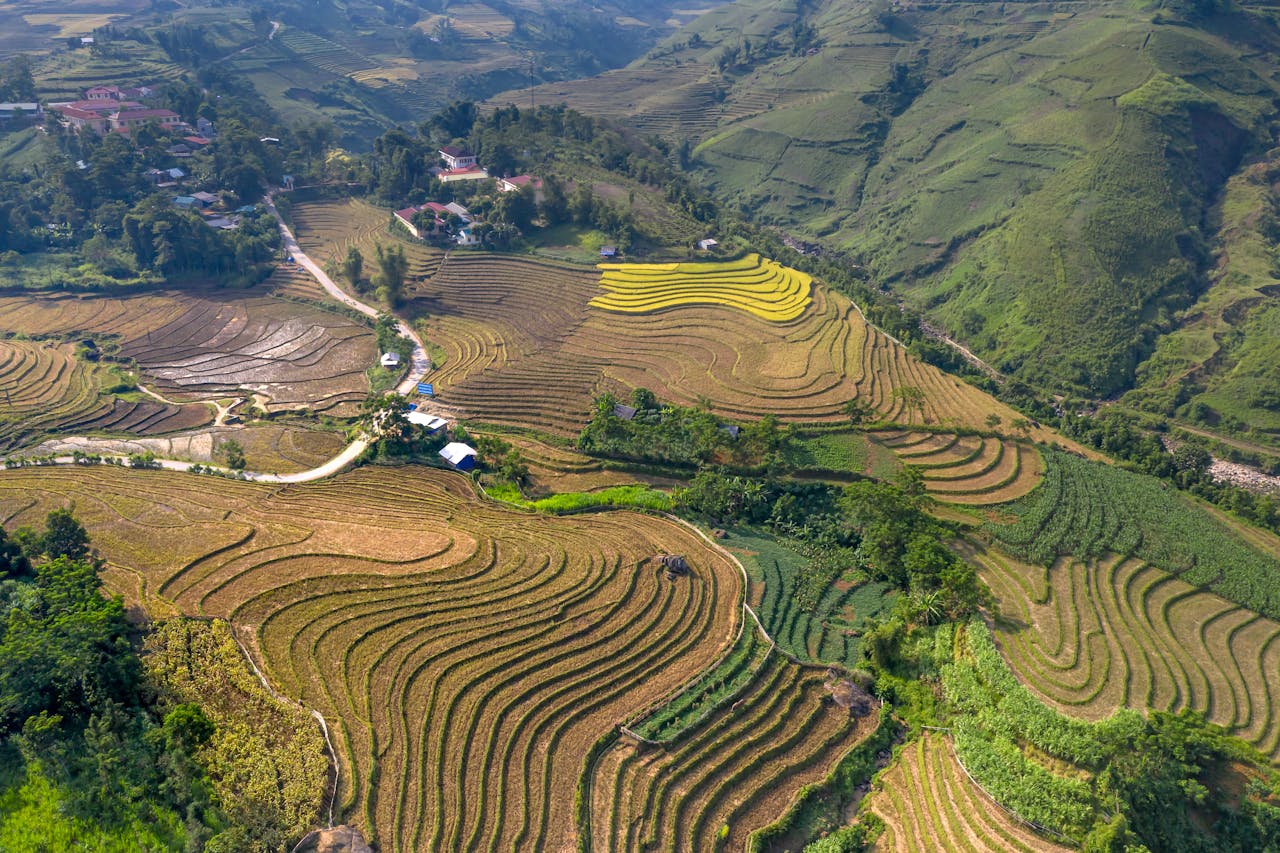
Who Grew This, and Could They Afford to Eat It?
Coffee, cotton, cocoa, bananas, and the vegetables beside the halal meat counter are almost all halal by default. But is it tayyib?
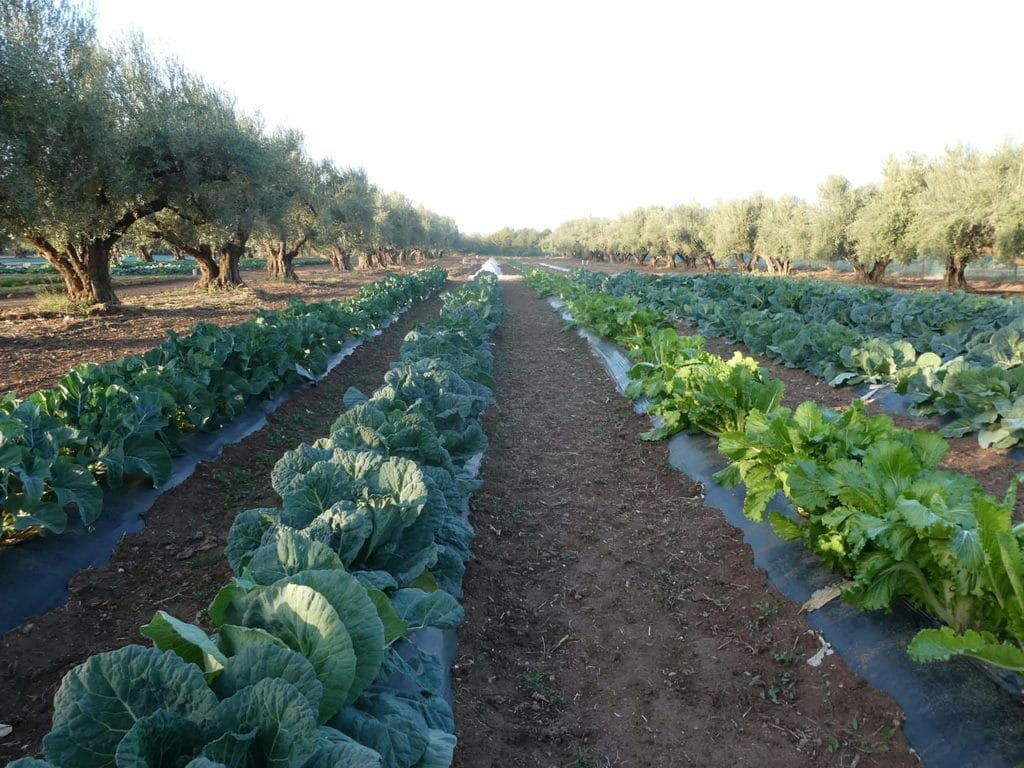
Plant foods are halal by default. Whether they are tayyib depends on who grew them and what it cost the land.
فَلْيَنظُرِ الْإِنسَانُ إِلَىٰ طَعَامِهِ
fal-yanẕuri l-insānu ilā ṭaʿāmihi
“Then let man look at his food” — Qur’an 80:24
Part two of a two-part series on eating halal and tayyib. Part one looked at meat, milk, and eggs.
- Who Grew This, and Could They Afford to Eat It?
- Same Two Words, a Harder Question
- What the Prophet ﷺ Taught About Fair Wages
- Coffee and Cocoa: The Fairness Test
- Cotton: An Old Trade Upended
- Bananas: Cheap at the Register, Costly in the Field
- Closer to Home: Italy, Spain, Canada and California
- What the Land and Water are Paying
- The Sunnah of Sufficiency
- So What Do You Actually Do?
- References and Further Reading
Same Two Words, a Harder Question
Part one of this series asked whether an animal’s life before slaughter could still be called tayyib even when the slaughter itself was lawful. Plant foods barely raise that question at all. Coffee, cotton, cocoa, bananas, wheat, vegetables- almost all of it is halal by near-automatic default.
So for everything here, the test has to move entirely onto the second word. Not good for your body this time, though that still matters, good in who it passed through on its way to you, and good in what it took from the earth to grow. That’s harder to check than a slaughter method, because it’s hidden behind more hands, more borders and more paperwork than a halal label was ever designed to cover. A chicken’s life is at least physically traceable to one farm. A bag of coffee or a cotton shirt has usually passed through a trader, a processor, a shipper, and a brand before it reaches you.
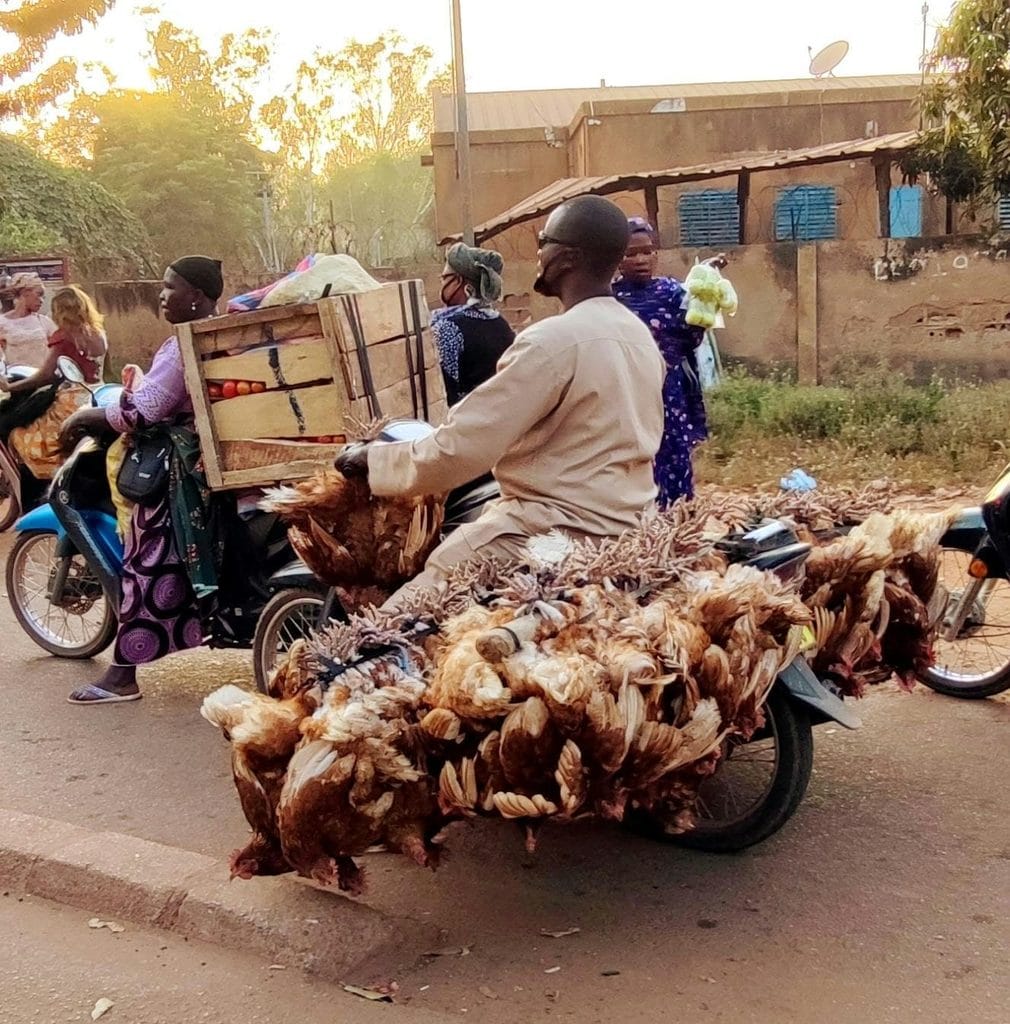
A chicken can be traced to one farm. Most plant foods pass through many more hands before they reach you.
This article walks through several of the plant foods and fibers most Muslim households buy every week, asks the same question part one asked of meat: who paid for this, and what did it actually cost, and ends, like part one did, with practical steps rather than a verdict. If you haven’t read part one, on meat, milk and eggs, this one doesn’t require it, but the two were written to be read together.
What the Prophet ﷺ Taught About Fair Wages
Part one built its case on hadith about how animals should be treated. This half of the series rests on a different, equally concrete body of hadith, not about animals, but about the people who grow, pick and process what you eat and wear.
“Give the worker his wages before his sweat dries.”
Sunan Ibn Majah
It’s a vivid image for a simple rule: pay promptly, and pay what was agreed. The Prophet ﷺ went further than timing. In a hadith narrated by Abu Hurayra, Allah is quoted as saying that on the Day of Resurrection He will personally be the opponent of three kinds of people, among them, “a man who hires a worker, gets full work out of him, and does not pay him his wages” (Sahih al-Bukhari). Withholding a wage isn’t treated as a civil matter to be sorted out later; it’s placed in the same category as breaking a covenant made in Allah’s own name.
The fairness was supposed to start before the work did, not just at payment. A hadith reported from Abu Sa’id al-Khudri instructs that whoever hires a worker must state the wage in advance, no ambiguity to be resolved later in the employer’s favor. And the standard wasn’t only about money:
“They are your brothers. Allah has placed them under your authority. So whoever has a brother under his authority should feed him from what he eats, clothe him from what he wears, and not burden him with more than he can bear.”
Sahih al-Bukhari & Sahih Muslim
That hadith was said about those under one’s direct authority in a very different economic world, and it would overreach to read it as a modern labor code. But the underlying principle, that power over someone else’s livelihood comes with an obligation not to exceed what they can bear, is exactly what this article tests against coffee, cocoa, cotton and banana supply chains. Anas ibn Malik, who served the Prophet ﷺ for ten years, said he was never once scolded for anything he did or failed to do.
Put together: a wage agreed before the work starts, paid without delay once it’s done, proportionate to what a person can actually bear, with no fine print the worker never saw. Keep this list in mind. The rest of this article asks how global agricultural trade holds up against it.
CAN THE FARMER AFFORD WHAT THEY GROW?
Coffee and Cocoa: The Fairness Test
Here’s a question worth sitting with before any statistic: if a cocoa farmer’s household cannot reliably afford to buy a bar of chocolate, is the sale of that chocolate, however halal every ingredient in it may be, actually a fair transaction?
Cocoa
Côte d’Ivoire and Ghana together grow more than 60% of the world’s cocoa, almost all of it on smallholder farms rather than large estates. Despite cocoa prices hitting record highs in recent years, independent monitoring keeps finding the same pattern underneath: the Rainforest Alliance estimates that only about 13% of cocoa-farming households in Côte d’Ivoire earn a living income, and Oxfam America puts Ghana’s figure at roughly 10%. A sector report commissioned by Mondelez International, one of the world’s largest chocolate makers, put the total income gap at around $10 billion a year across the two countries; closing it, the report estimated, would let three-quarters of cocoa-farming households earn above UN-defined poverty levels. Researchers continue to document roughly 1.5 million children working in cocoa cultivation in Ghana and Côte d’Ivoire in conditions classified as hazardous, including direct contact with agrochemicals and dangerous tools.
~13% / ~10% of cocoa households earning a living income, Côte d’Ivoire / Ghana
$10B/yr estimated income gap across the two countries
1.5M children in hazardous cocoa-farming labor
Coffee
Coffee follows a similar arithmetic. Industry studies of value distribution in the coffee chain put the farmer’s share at roughly 7–15% of what a cup retails for; on a $6 coffee, that can be as little as 40 cents reaching the person who grew it, with processing, shipping, roasting and retail absorbing the rest. Most of the world’s coffee moves through a short list of trading houses that buy from millions of dispersed smallholders and sell to a much shorter list of roasters; several of these firms trace their roots to 19th-century Swiss merchant houses that once moved Indian cotton and colonial-era coffee in similar volumes. That history isn’t evidence of wrongdoing by any particular company; it’s a structural reason why bargaining power sits overwhelmingly on one side of this trade and not the other.
The same question applies here as with cocoa: a coffee farmer earning 40 cents on a $6 cup is not, on the numbers, likely to be a coffee drinker themselves. Fair-trade and direct-trade coffee exist and genuinely pay more, but they remain a small share of total global volume, which matters for what this article recommends later, because it means better sourcing alone can’t carry all the ethical weight here the way switching to pasture-raised lamb could in part one.
AN OLD TRADE, TURNED UPSIDE DOWN
Cotton: An Old Trade Upended
Long before cotton was cheap, it moved through a very different kind of trade.
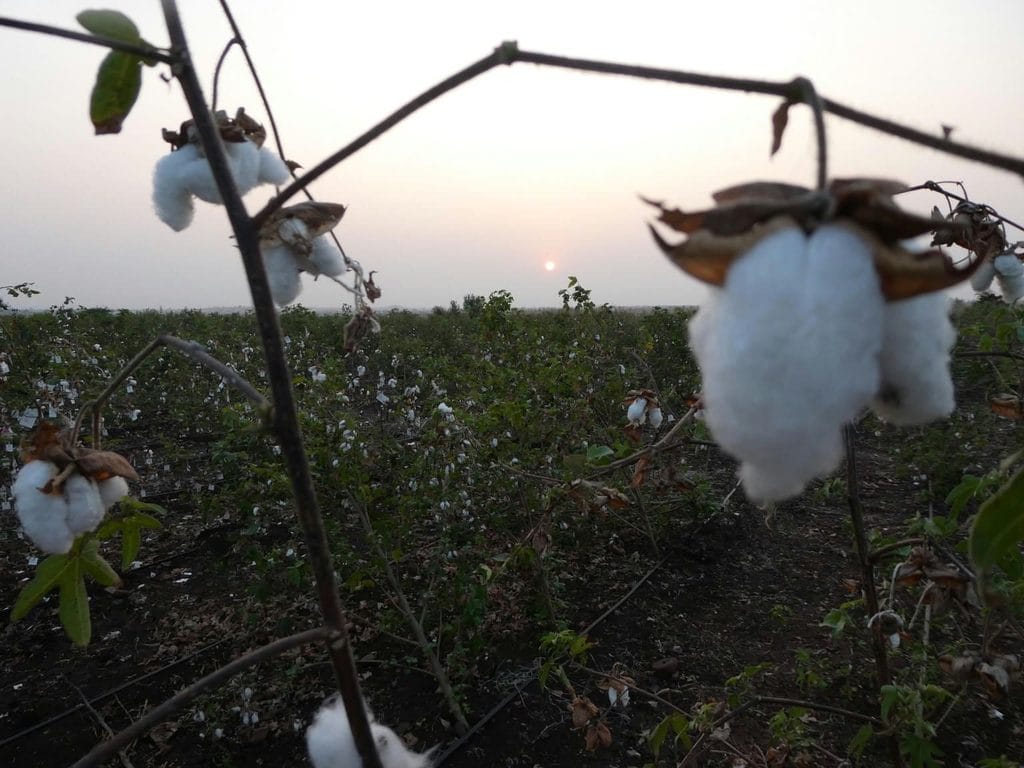
Cotton is among the thirstiest and most pesticide-intensive crops grown anywhere.
For centuries before European colonization, the world’s finest cotton textiles, Indian calico and muslin, moved through Indian Ocean trade networks organized substantially by Gujarati, Bengali and Arab merchants operating under Mughal, Ottoman and other Muslim-ruled polities, reaching markets from East Africa to Southeast Asia as premium goods produced by artisan weavers. Economic historians who study this period (Sven Beckert’s Empire of Cotton, notably) don’t describe it as a utopia free of hierarchy, but it did not depend on chattel slavery to function.
What changed it was the colonization of the Americas. Vast new cotton land, worked by enslaved Africans, let European, chiefly British, manufacturers access raw cotton at a cost no free Indian Ocean producer could undercut. Colonial trade policy then actively suppressed Indian textile manufacturing through tariffs and import restrictions to protect British mills. Cheap, slavery-produced American cotton, not some neutral technological advance, is a documented part of what built the modern cheap-textile industry, a detail worth remembering next time “fast fashion” gets described as simply a modern convenience.
The modern cotton trade still runs through a small number of concentrated trading houses, much like coffee. Forced labor in cotton is not only a nineteenth-century story, either: the UN human rights office assessed in August 2022 that labor-transfer programs affecting Uyghur and other minority communities in China’s Xinjiang region, a major cotton-growing area, may amount to serious human rights violations, a finding the Chinese government disputes. Several governments have since restricted imports of cotton tied to the region.
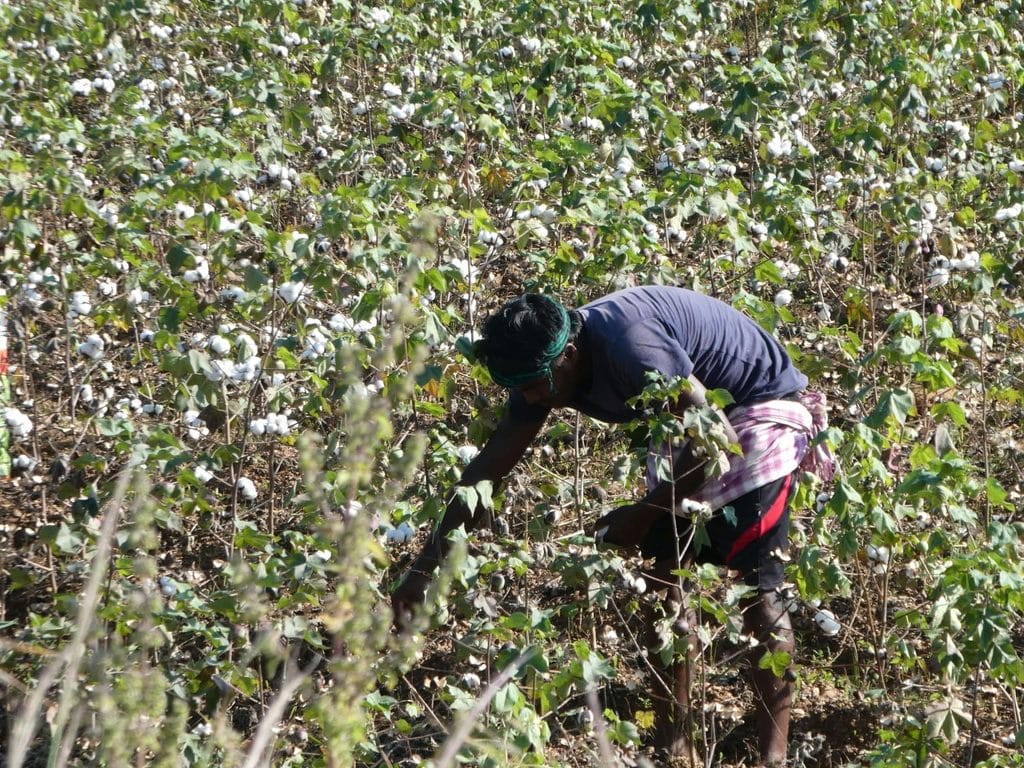
Much of the world’s cotton is still picked by hand.
India raises a different problem. Most Indian cotton is now grown from genetically modified Bt seed, which costs far more than the farm-saved seed it replaced and has to be bought fresh each season along with the fertilizer and pesticide it’s typically sold with. Whether the technology itself drives farmer suicides is genuinely disputed among researchers: some studies tie Bt adoption to higher yields and fewer suicides, others point to the debt cycle created by expensive inputs, volatile prices and drought as the real driver. Less disputed is the acute toll of the pesticides themselves: in 2017, a wave of pesticide poisoning among cotton farmworkers in Maharashtra’s Yavatmal district killed more than twenty people and sickened hundreds more.
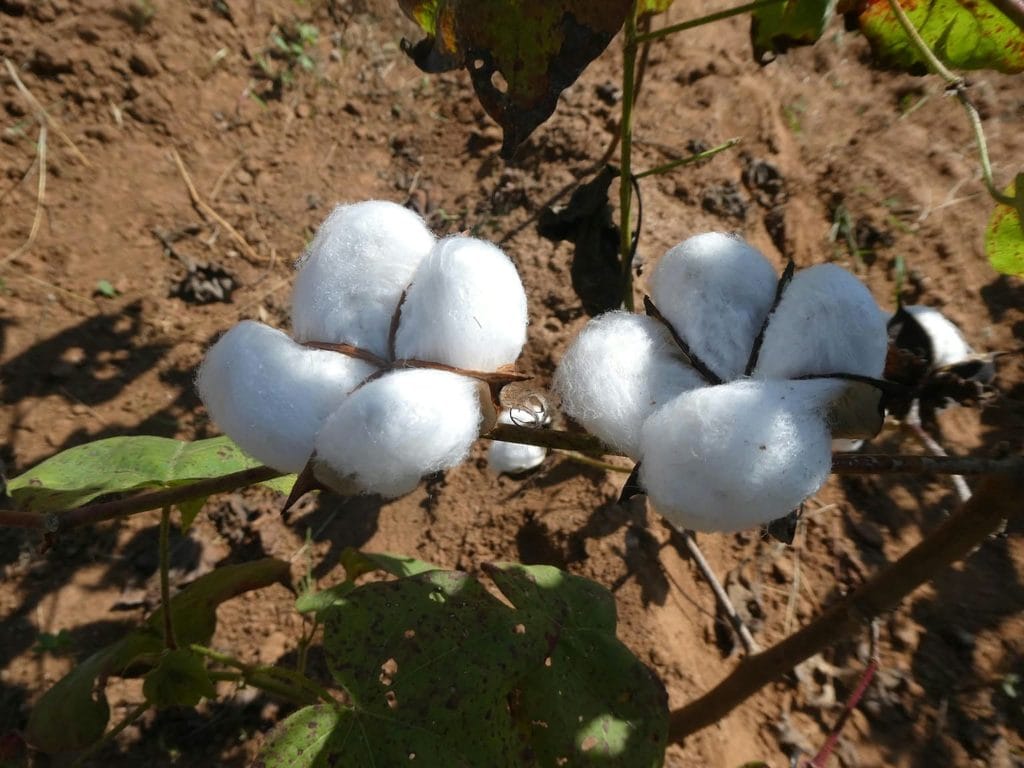
Most Indian cotton is now grown from genetically modified Bt seed, bought fresh each season.
Unlike a halal sticker on meat, there is no routine label on a cotton shirt that tells you which region, or which seed, grew the fiber inside it, which makes cotton one of the hardest categories in this whole series to verify, not just to know about. Here, organic cotton definitely makes sense.
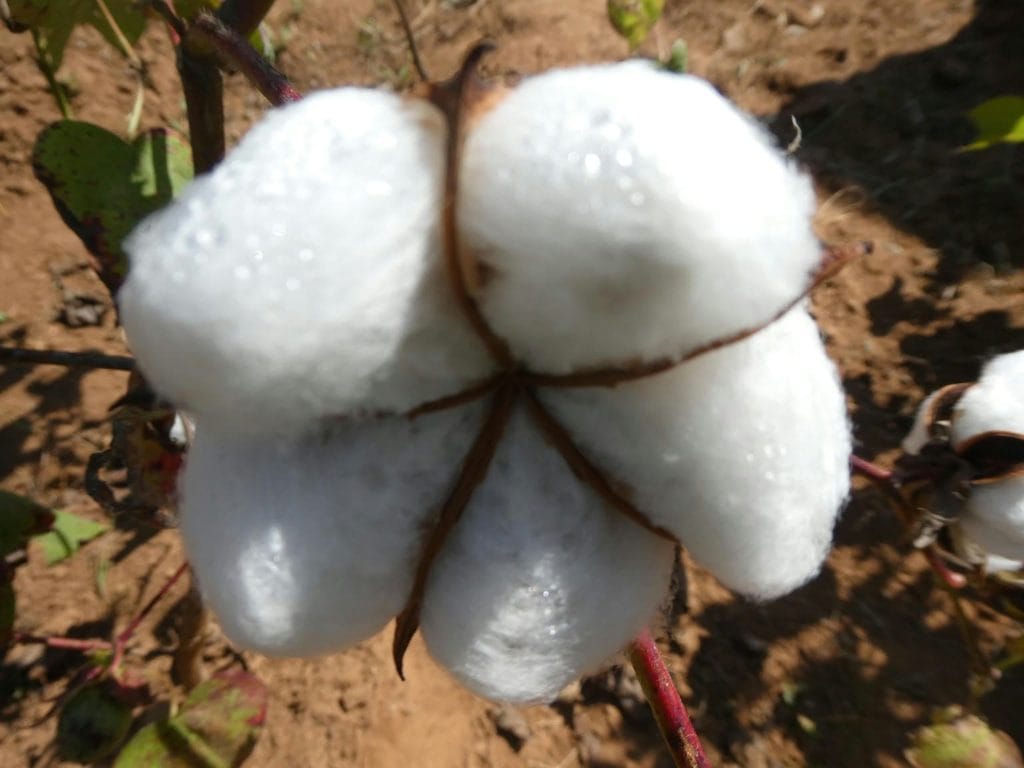
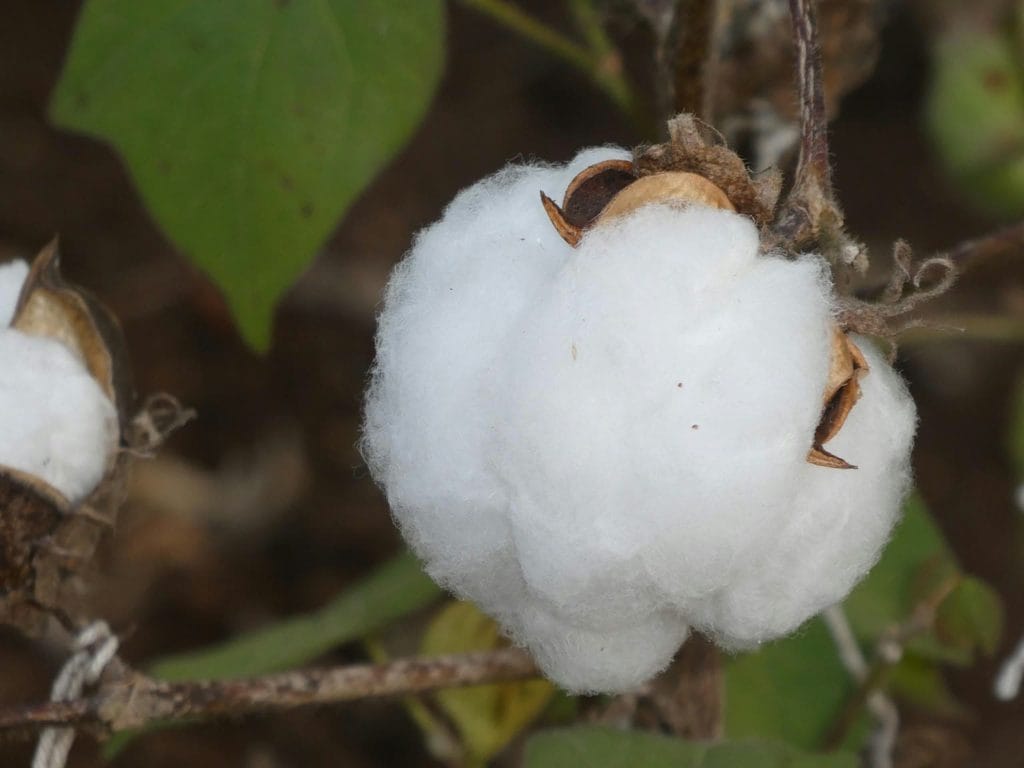
No label on a cotton shirt tells you which region, or which seed, grew the fibre.
Bananas: Cheap at the Register, Costly in the Field
Few foods are priced as cheap, everyday fuel as reliably as the banana, which is exactly why its production side rarely gets a second look.
The trade carries a specific history. United Fruit Company, the ancestor of today’s Chiquita, came to own roughly 220,000 acres of Colombian farmland alone by the 1920s, plus large holdings across Central America, and leaned on that scale to shape the politics of entire countries, the origin of the phrase “banana republic.” When its Colombian workers struck in 1928 over wages and sanitary housing, government troops sent in on the company’s behalf opened fire on a crowd gathered in the town of Ciénaga; estimates of the dead range from several dozen to over a thousand. Pineapple carries a related scar: Dow manufactured the pesticide DBCP, and Dole sprayed it on Central American banana and pineapple plantations for years after the US banned its agricultural use in 1979, leaving thousands of plantation workers sterile. Nicaraguan courts eventually awarded over $600 million in damages against Dow and Dole; US courts refused to enforce the judgment.
Reporting on major export-banana operations today, including documented accounts involving Chiquita’s plantations, describes wages that have stayed largely flat for years, with the average banana worker in producing countries earning very little to survive. Chlorpyrifos, a pesticide linked to seizures, paralysis, and lower IQ in children exposed to it, remains in use in parts of the industry; advocacy groups and labor researchers (including Banana Link and the watchdog CETIM) have documented workers lacking adequate protective equipment, sometimes being sprayed while still in the field.
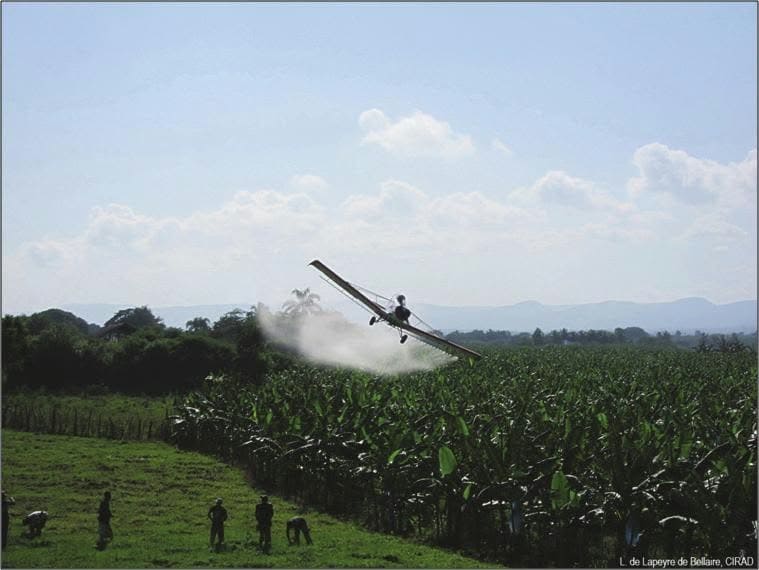
Aerial spraying over a banana plantation. Workers have been documented being sprayed while still in the field. Photo: L. de Lapeyre de Bellaire, CIRAD
Run the same fairness test used above: a banana costs pennies at the register. The people who grew it are, by these figures, among the least likely in the whole food system to be able to match that math against their own household’s food basket.
THIS ISN’T ONLY AN OCEAN AWAY
Closer to Home: Italy, Spain, Canada and California
It would be a mistake to treat any of this as a problem confined to faraway supply chains. It shows up inside the EU, Canada, and the US too, often in the same produce aisle as the halal meat counter.
Italy
Southern Italian agriculture, tomato fields in Puglia, citrus groves in Sicily and Calabria, has been repeatedly documented by Oxfam, Respect International and the Council of Europe as relying on an informal recruitment system known as caporalato (gangmaster labor), in which largely undocumented African migrant workers are hired through intermediaries for wages far below the legal minimum, often housed in informal camps with little sanitation, and in documented cases have died from heat exhaustion during summer harvests. Many of these workers arrive already in debt: recruiters at home, or brokers along the migration route, charge thousands of euros for the promise of a legal job that sometimes doesn’t exist, and people who can’t repay what they owe have little real choice but to keep working on whatever terms a caporale offers.
Spain
Much of Spain’s vegetable and fruit industry depends heavily on seasonal migrant labor, overwhelmingly Moroccan women hired on temporary contracts. Council of Europe reporting and complaints raised with a UN special rapporteur have documented wage underpayment, overcrowded and unsafe housing, and allegations of sexual harassment and abuse against some employers, serious enough that several supermarket chains sourcing from the region have faced direct public pressure over it. Spain’s version of dependency runs through a different mechanism than Italy’s: workers are recruited directly by the Spanish state under a “circular migration” scheme open mainly to Moroccan mothers with young children, who must agree to return home once the contract ends. That return requirement, stacked on near-total reliance on one employer for housing, pay, and status, has drawn criticism from rights groups for leaving workers little practical room to report abuse without risking next season’s contract.
Canada
The Seasonal Agricultural Worker Program brings tens of thousands of mostly Mexican and Caribbean workers to Canadian farms each year on permits tied to one named employer, so housing, health care access and the right to stay in the country can all hinge on staying in that employer’s good graces. In 2023, the UN’s special rapporteur on contemporary slavery called Canada’s temporary foreign worker system, which this program is part of, a “breeding ground for contemporary forms of slavery,” pointing to workers who tolerate unsafe conditions or unpaid wages rather than risk being sent home mid-contract.
California
A survey of more than 1,200 farmworkers conducted by researchers affiliated with the Union of Concerned Scientists found that about half had no health insurance, between a third and a half had at least one chronic health condition, and nearly half had never received a heat-illness prevention plan despite working in valleys where summer temperatures regularly exceed 110°F. Thirteen percent reported working through wildfire smoke dense enough to make breathing difficult, usually without respiratory protection, and about half of those who handled pesticides in the past year did so without adequate training.
None of this requires an ocean crossing to find.
THE EARTH HAS A STAKE IN THIS TOO
What the Land and Water are Paying
Part one tied tayyib to what feedlot agriculture takes from the land. Plant agriculture takes its own toll, just measured in different units, mainly water, pesticide load, and soil.

Parched, cracked soil: water and soil fertility are the hidden costs of cheap produce.
Cotton is one of the thirstiest and most pesticide-intensive crops grown anywhere; Soviet-era cotton irrigation is a direct, well-documented cause of the collapse of the Aral Sea, once the world’s fourth-largest lake, now largely a desert of exposed, chemical-laced seabed. Banana cultivation leans on chlorpyrifos and fungicides, partly because the globally dominant Cavendish variety is a genetic monoculture with little natural disease resistance. Cocoa and, to a lesser extent, coffee expansion have been linked to deforestation pressure in West Africa and parts of Latin America as production frontiers push into forest land.
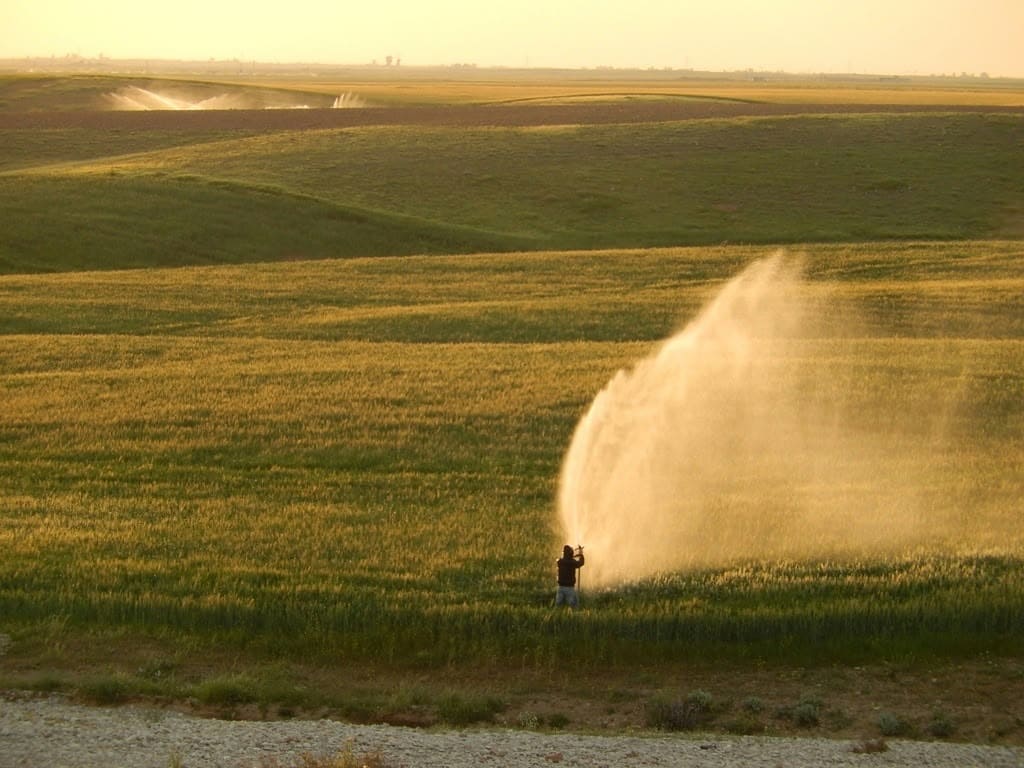
Irrigation draws on aquifers that took millennia to fill and are being drawn down in decades.
This isn’t only a cash-crop problem. Fertilizer runoff from ordinary North American row-crop farming, corn, soy, wheat, feeds toxic algae blooms downstream: Lake Erie’s recurring blue-green algae crisis, which cut off Toledo’s drinking water for two days in 2014, and Lake Winnipeg’s, now one of the most eutrophic large lakes in the world, both trace substantially back to phosphorus washing off farmland. The pesticides on these crops don’t stay on the field either: atrazine, among the most common herbicides in North America, shows up routinely in rural drinking water, and people who live or work near treated fields carry measurably higher pesticide residues in their blood than the general population.
Out-of-season produce carries its own hidden cost. Almería, in southern Spain, grows an outsized share of Europe’s winter tomatoes, peppers and cucumbers under roughly 30,000 hectares of plastic greenhouses, a stretch so vast it’s visible from space as a shimmering white sea. The system runs hot on inputs: pesticide use inside enclosed greenhouses typically exceeds open-field farming, plastic waste piles up every season, and many of the people who tend it are the same migrant workers described above. A tomato grown this way travels a short distance to a European table, but its production footprint looks a lot like the long-haul import it’s meant to replace.
There’s a pattern worth naming: a lot of what looks like modern abundance is really a set of imports, water pumped from aquifers filled over millennia and drawn down in decades, nitrogen manufactured from natural gas shipped in from elsewhere, soil fertility mined from a handful of countries and shipped out. Take the imports away, and the abundance goes with them, not a future risk, but a description of what today’s low prices are already made of.
EATING LESS AND SHARING MORE
The Sunnah of Sufficiency
Part one closed with al-Ghazali’s argument that an unrestrained stomach is the root of a long chain of moral corruption, and that hunger, deliberately chosen, breaks that chain. This part of the series draws on a related but distinct body of Sunnah material, focused less on gluttony as a private vice and more on sufficiency as a shared, almost arithmetic, obligation.
“No human being fills a vessel worse than his stomach. It is enough for the son of Adam to eat a few morsels to keep his back straight. But if he must eat more, then a third for his food, a third for his drink, and a third for his breath.”
Jami’ al-Tirmidhi 2380, graded sahih
“The believer eats in one intestine; the disbeliever eats in seven.”
Sahih al-Bukhari 5393 & Sahih Muslim 2060
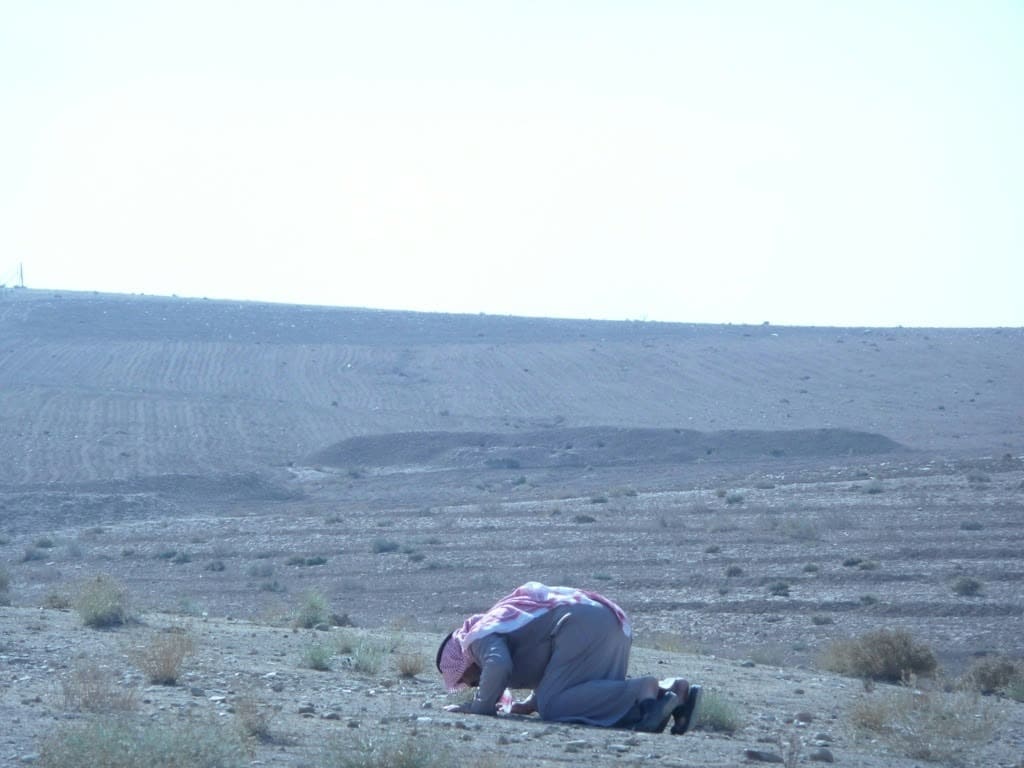
The Sunnah frames restraint as worship, with taqwa as the stated goal.
This wasn’t abstract teaching. ‘A’isha (may Allah be pleased with her) reported that the crescent moon would be sighted three times across two months without a fire ever being lit in the Prophet’s ﷺ household for cooking, the family living on dates and water (Sahih al-Bukhari 6459). Separately, it’s reported that his family never ate their fill of barley bread two nights running for as long as he lived (Sahih al-Bukhari 5416, Sahih Muslim 2970). Meat, in that household, was for celebration and hospitality: Eid, a wedding feast, a guest, not the default center of a daily plate.
| Red meat | Staple of the diet | |
| EAT-Lancet reference diet (2019) | ~14 g / day | Legumes and whole grains |
| Seventh-century Madinah | Occasional — Eid, a wedding, a guest | Barley, dates, milk, olive oil, vegetables |
Modern planetary-boundary science and a seventh-century Madinan household arrive, independently, at roughly the same place. The Sunnah didn’t need an emissions model to get there; it had a different stated reason entirely, taqwa, not resource scarcity, which the next hadith makes into something closer to a justice argument than a dietary one:
“He is not a believer whose stomach is full while his neighbour goes hungry.”
Adab al-Mufrad 112, graded sahih
It’s the same logic as the cocoa-farmer question above, just run the other way.
645M people hungry in 2025 — 7.8% of humanity
1B+ adults and children living with obesity, 2022
1.05 B tonnes of food wasted in 2022 — 19% of what’s available to consumers
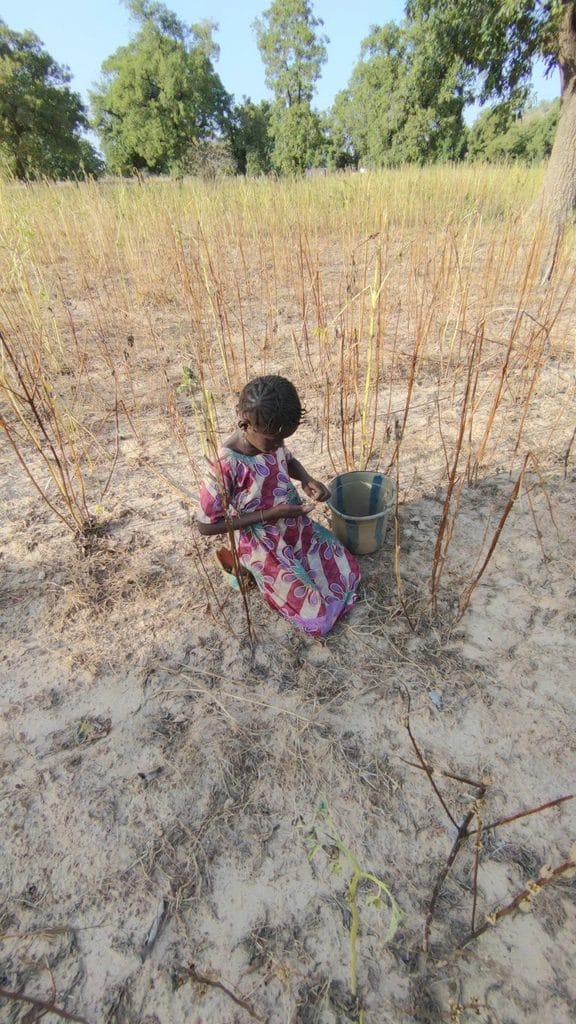
Hunger and plenty exist side by side: what one stomach takes, another is denied.
This is a justice teaching: what one stomach takes, another is denied. It’s an ecology teaching: what one field is forced to over-yield, the next season or the next generation loses. And it’s a worship teaching: the stomach is where self-government is practiced or abandoned, with taqwa as the stated goal rather than a side effect. A limit accepted for the sake of Allah survives a good harvest. A limit accepted only for the sake of a statistic usually doesn’t.
PRACTICAL STEPS, NOT A VERDICT
So What Do You Actually Do?
Here’s the honest problem first: if you want tomatoes in January, or the Almería-grown version year-round, you are, almost by definition, choosing between intensive greenhouse production and a long-haul import. There usually isn’t a hidden third option waiting at the supermarket. This section isn’t going to pretend otherwise; it’s going to give you ways to actually act on everything above, rather than ways to feel better about not acting.
- Eat by your ecoregion, not just your craving
- A household in Minnesota or Manchester building meals around mango, avocado, and off-season tomatoes is asking its plate to ignore where it actually lives. What grows well, locally, in your climate and season is usually also the freshest and least logistically burdened food available to you. Seasonal Food Guide (seasonalfoodguide.org) lets you search by US zip code or Canadian province; Eat Seasonably does the same for the UK.
- Join or buy from a CSA
- A Community Supported Agriculture (CSA) share means paying a local farm upfront for a weekly portion of its harvest, the closest thing to being able to actually ask someone how your food was grown. LocalHarvest.org lists thousands of CSAs across the US, searchable by zip code; Young Agrarians and Canadian Organic Growers maintain regional directories across Canada; the UK CSA Network (communitysupportedagriculture.org.uk) lists member farms by region.
- Treat “organic” and “fair labor” as two separate claims
- Organic certification is a genuine environmental signal, far less synthetic pesticide use, better soil and biodiversity outcomes, and that should be said plainly. But it is not a labor standard. US organic accreditation carries no workplace-conditions requirement, and a University of California, Davis survey of California’s own organic growers found that most didn’t offer their workers a living wage or health insurance, with roughly 40% of growers surveyed disagreeing that farmworkers should have the right to unionize. Organic answers the environment question; it doesn’t answer the fairness one. Where organic and Fair Trade or direct-trade certification stack together, that’s the closest a label gets to covering both at once.
- Ask the second question; the one the label doesn’t answer
- Part one asked you to ask your halal butcher how an animal was raised, not just how it was slaughtered. The same habit applies here: ask your grocer, your café, your co-op where the coffee, chocolate or cotton actually came from. Few will have a full answer yet. That’s the point; asking signals demand for an answer that doesn’t currently exist on most shelves.
- Apply the prophetic third to everything, not just meat
- The Sunnah-of-sufficiency practice of serving a third of your usual portion, drinking water, skipping seconds, and eating slowly doesn’t have to be reserved for meat. Extended to coffee, chocolate, and out-of-season produce generally, it does real work even without a perfect supply chain behind it: less of the hardest-to-verify, farthest-traveled items, rather than cutting any of them out entirely.
- Let a food’s Sunnah status guide what you eat, not how it was produced
- A food’s place in the Sunnah (dates, olives, honey) tells you it’s good to eat. It tells you nothing about whether this particular batch, grown this particular way, drew down an aquifer or underpaid the people who harvested it. Ask the production question separately, every time, for every food, including the ones that feel automatically blessed.
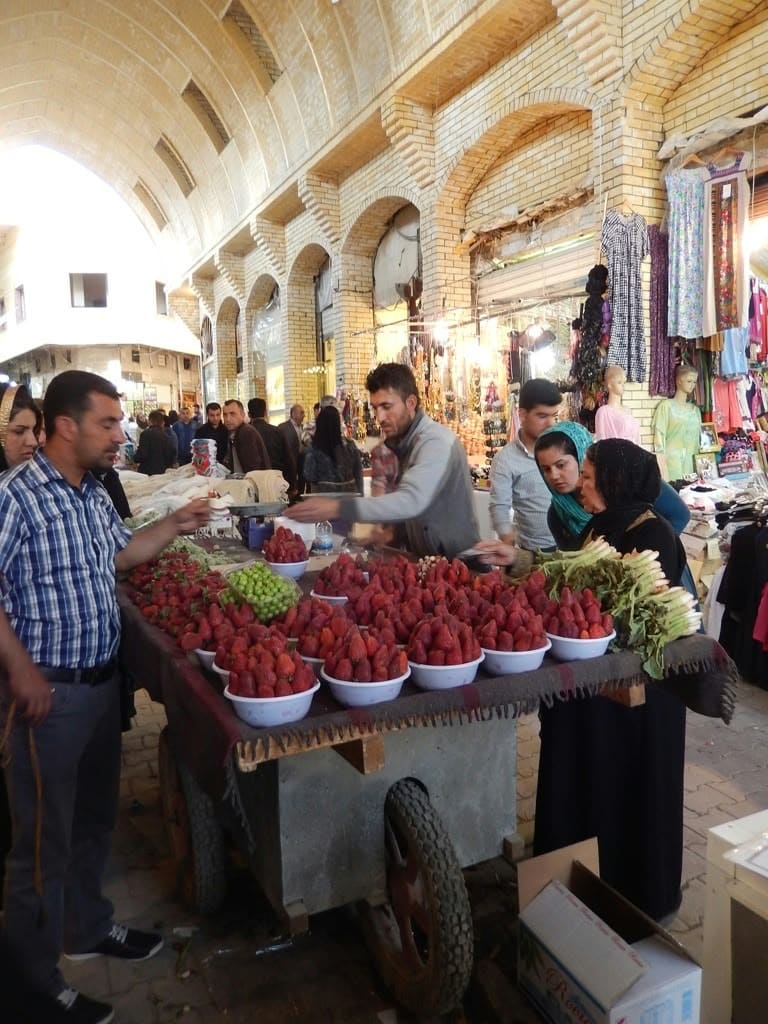
Ask the person selling it: where did this actually come from?
A Closing Thought
None of this is about guilt, or about memorizing which of a dozen commodities is currently the least exploitative; that list changes every year anyway. It’s about the same discretion the Prophet ﷺ showed toward a hired man’s wage and a mother bird’s distress, extended to a global supply chain neither of them could have imagined, so that eating and dressing become things you do with your eyes open rather than your eyes closed. That’s the whole aim of this two-part series: not a verdict handed to you, but the habit of asking where something actually came from before it reaches your plate or your closet.
islamicagroecology.org · This is part two of a two-part series. Part one looked at meat, milk, and eggs through the same halal-and-tayyib lens.
References and Further Reading
Hadith are cited to their primary collections (Sahih al-Bukhari, Sahih Muslim, Sunan Ibn Majah, Jami’ al-Tirmidhi, Adab al-Mufrad). Statistics, trade, and labor data below.
- Rainforest Alliance; Oxfam America, cocoa living-income estimates, via Cocoa Barometer 2025 reporting (Ghana News Agency, October 2025)
- Mondelez International, “No Silver Bullet” cocoa sector report, cited in Confectionery Production (2024)
- NORC at the University of Chicago / Tulane University, child labor in West African cocoa-growing areas, ongoing monitoring reports
- IDH Sustainable Trade Initiative, “The Grounds for Sharing: A Study of Value Distribution in the Coffee Industry” (2024)
- University of Melbourne, Pursuit, “How much of your $6 coffee actually reaches the farmer?”
- Public Eye (Switzerland), “Switzerland: A Global Hub in Agricultural Commodity Trade”
- Sven Beckert, Empire of Cotton: A Global History (Knopf, 2014)
- UN Office of the High Commissioner for Human Rights, “OHCHR Assessment of Human Rights Concerns in the Xinjiang Uyghur Autonomous Region” (August 2022)
- Gutierrez et al. and critical responses, on Bt cotton adoption and farmer suicide rates in India; reporting on the 2017 pesticide poisoning deaths in Yavatmal, Maharashtra
- Encyclopaedia Britannica, “Banana Massacre” (Ciénaga, Colombia, 1928); historical and legal reporting on United Fruit Company and the Dow/Dole DBCP litigation
- FoodPrint, “Big Banana’s Bitter Labor Truths”; Banana Link, wages and labor reporting on Latin American banana production; CETIM, Chiquita plantation labor campaign materials
- Oxfam / Respect International, “Human Suffering in Italy’s Agricultural Value Chain” (2020); Hespress English, reporting on debt and recruitment in Italy’s “agromafia” network
- FIDH, “Importing Workers, Exporting Strawberries: Working Conditions on Strawberry Farms in the Huelva Province, Spain”
- UN Special Rapporteur on contemporary forms of slavery, statement on Canada’s Temporary Foreign Worker Program (September 2023)
- Union of Concerned Scientists / Grist, farmworker heat, smoke and pesticide exposure survey reporting (California, 2023–2024)
- UC Davis survey of California organic growers on wages, insurance and labor rights, cited in Grist, “Organically Groan: Working Conditions on California’s Organic Farms”
- NASA Earth Observatory and CBC reporting on Lake Erie and Lake Winnipeg algae blooms; USGS/EPA data on atrazine in US waterways
- Reporting on Almería, Spain’s greenhouse horticulture sector and its labor and environmental footprint
- FAO, IFAD, UNICEF, WFP, WHO, “The State of Food Security and Nutrition in the World” (SOFI 2026)
- UNEP Food Waste Index Report 2024; Cassidy et al., Environmental Research Letters (2013), on crop calories diverted to animal feed
- Raj Patel, Stuffed and Starved: The Hidden Battle for the World Food System
- Willett et al., EAT-Lancet Commission, “Food in the Anthropocene” (2019)
- Yaqeen Institute, “40 Hadiths on Social Justice,” Hadith 20: “Before the Sweat Dries”
- Seasonal Food Guide (seasonalfoodguide.org); Eat Seasonably (UK); LocalHarvest.org; UK CSA Network (communitysupportedagriculture.org.uk)